

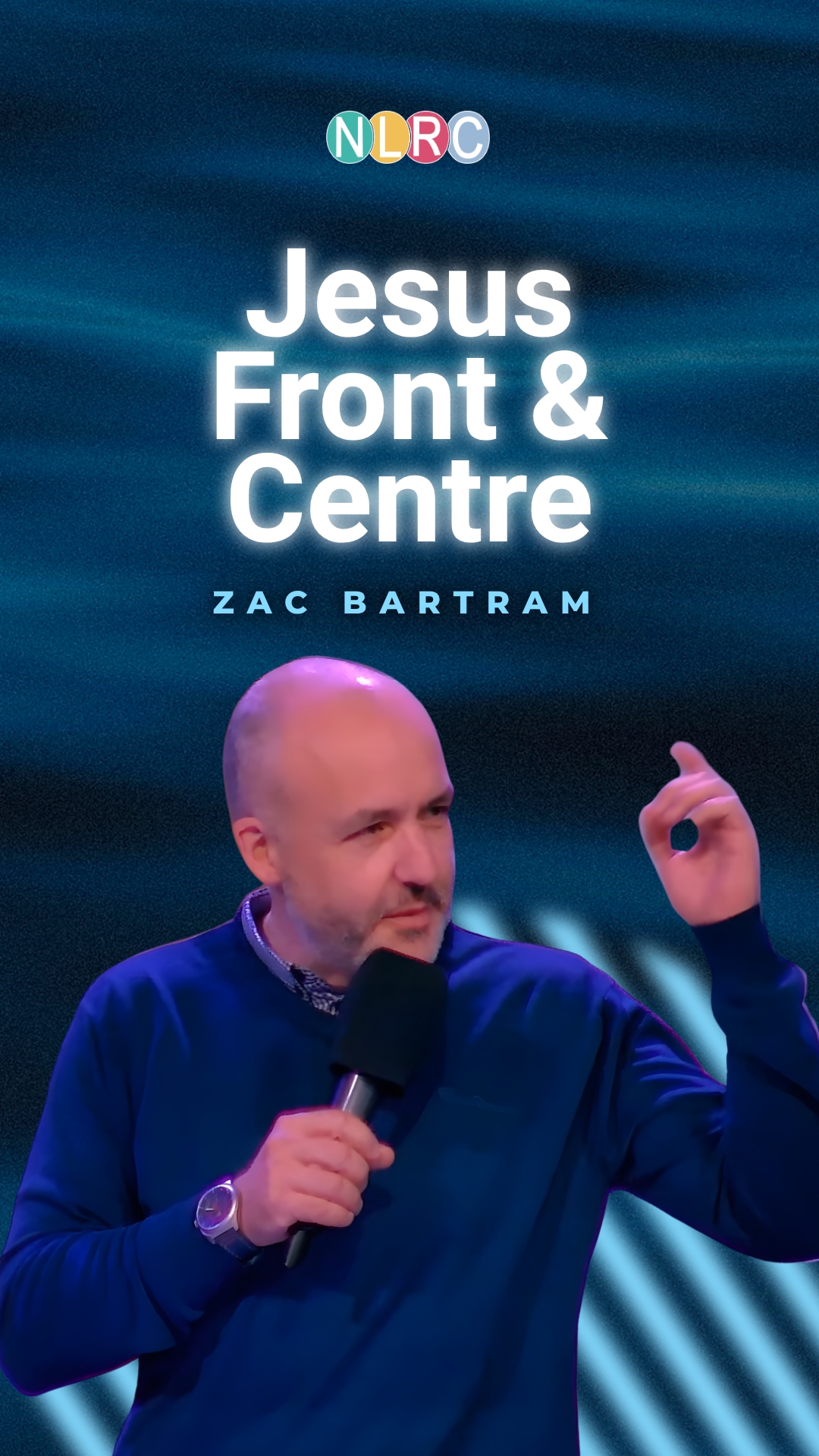
It's Still All About Jesus: Contending to Put Jesus Front and Center
Faith is not a passive experience. There is often a gap between what we confess to believe and how we actually live it out. This is a look at what it means to actively and intentionally keep Jesus at the center of every thought, decision, and action, not just on Sunday mornings, but every single day.
Why Is It So Easy to Drift From Faith-Filled Moments?
Many of us can genuinely yield and surrender to God in a moment of worship, only to find that by Tuesday afternoon, that sense of submission feels like a distant memory. Life happens. Frustrations build. Thoughts wander.
This is not a sign of failure. It is a sign that keeping Jesus front and center is an active effort, not a passive one. It requires contending, which means intentionally and consistently choosing to bring our thoughts and actions into alignment with what God's Word says.
What Does the Bible Say About Freedom From Sin?
Before anything else, the foundation needs to be clear. We were once slaves to sin, but the price for our freedom has already been paid.
"Knowing this, that our old man was crucified with Him, that the body of sin might be done away with, that we should no longer be slaves to sin. For he who died has died and set us free from sin." - Romans 6:6-7
"Everyone who sins is a slave to sin. Now a slave has no permanent place in the family, but a son belongs to it forever. So if the Son sets you free, you are free indeed." - John 8:34-36
Jesus Himself draws a distinction between being free and being truly free. Because of what He did, we have no excuses. We are not limited by our old ways of thinking anymore.
Faith Without Works Is Dead: What Does That Mean Practically?
Yielding to God is a choice, but it must be followed by action. James makes this plain.
"Submit to God, resist the devil and He will flee from you." - James 4:7
Resisting is active. Do not be surprised if there is no fleeing when there is no resisting. Submitting and then doing nothing is not the full picture. Faith should move us, just as love and compassion stir us to serve and bless others.
It is also important to note that contending for faith is not the same as striving. Striving is doing things without God, or worse, trying to do God's job for Him. Our role is to submit, to be active, and to put Jesus at the center. The results belong to Him.
What Happens When We Stop Digging Deep Into God's Word?
The parable of the house built on the rock in Luke 6 carries a warning that is easy to miss, especially when we have heard the story many times.
"Everyone who comes to me and hears my words and puts them into practice, I will show you what they are like. They are like a man building a house who dug down deep and laid the foundation on the rock." - Luke 6:47-48
The key phrase is "dug down deep." A foundation that does not reach bedrock is vulnerable to slow, invisible movement over time. In the same way, if we are not actively and deeply rooting ourselves in God's Word, our thinking, our speech, and our behavior can drift, not all at once, but gradually.
Three Things That Can Shift Our Thinking Without Us Noticing
- Cultural undercurrents: Like groundwater moved by tides, the culture around us can slowly shift the way we think without us realizing it.
- Known pressures: Like rivers we can see, these are the challenges we know about and can plan for.
- Unexpected storms: The things that catch us off guard. When they hit, is Jesus front and center in how we respond?
The good news is that when we do dig deep, there is a promise attached. "That house could not be shaken because it was well built." Depth in Christ produces mental, emotional, and spiritual resilience.
How Our Assumptions Can Lead Us Astray
Even people who walked closely with Jesus struggled with assumptions about how He would work.
John the Baptist, who boldly declared Jesus as the Lamb of God, later sent His disciples to ask from prison whether Jesus was really the one they had been waiting for. Jesus had not matched John's expectations.
The disciples, after three years with Jesus, still did not fully understand where He was going or what He was doing. They thought they knew, but they did not.
The same can happen to us. We can assume we know how God will move, what He will do, or which option He will choose from the ones we have already worked out. But God's ways are not limited to our understanding. Keeping Jesus front and center means staying open to His Word and His Spirit, rather than relying on what we already think we know.
What Does It Look Like to Put Jesus First in Everyday Work and Decisions?
God is genuinely interested in every area of our lives, including our workplaces, our businesses, and our leadership.
"However, when He, the Spirit of truth, comes, He will guide you into all truth. For He will not speak on His own authority, but whatever He hears He will speak, and He will tell you things to come." - John 16:13
This means the Holy Spirit is available to give insight, direction, and wisdom in the middle of meetings, decisions, and difficult situations. But it takes an active effort to pause, ask, and listen rather than simply pressing forward on our own understanding.
Sometimes God's instruction will not come with an explanation. Putting Jesus front and center may mean obeying without fully understanding why, just as Joshua and the Israelites walked silently around Jericho blowing trumpets. It made no natural sense, but it was God's way, not theirs.
Seeking God's Righteousness, Not Just Our Own Justice
"Seek first the kingdom of God and His righteousness, and all these things will be added to you." - Matthew 6:33
There will be moments when we face genuine injustice, situations where we have every right and authority to respond. But the question to ask is whether our response is righteous, whether it flows from forgiveness, grace, and love, or whether it is simply our own reaction dressed up as justice.
Choosing forgiveness over retaliation, even when retaliation feels justified, is one of the most powerful ways to put Jesus front and center. The transformation that can follow in another person's life is not something we produce. It is what Jesus does when we get out of the way.
How Do We Take Every Thought Captive?
"For the weapons of our warfare are not carnal, but mighty in God for pulling down strongholds, casting down arguments, and every high thing that exalts itself against the knowledge of God, bringing every thought captive to the obedience of Christ." - 2 Corinthians 10:4-5
The battle is often in the mind. Thoughts can spiral. Daydreams can turn into frustration. Assumptions can harden into bitterness. Taking thoughts captive is not passive. Sometimes it needs to be aggressive and deliberate, speaking out loud if necessary, refusing to let the mind wander into territory that does not line up with love, truth, or faith.
We are not left to do this alone. Because we have received the Holy Spirit, we have access to something remarkable.
"No one can know God's thoughts except God's Spirit. But we have received God's Spirit, not the world's Spirit, so we can know the wonderful things God has freely given us." - 1 Corinthians 2:11-12
"We understand these things because we have the mind of Christ." - 1 Corinthians 2:16
We can hear the Holy Spirit. We can understand what He is saying. We can bring our thoughts into line with what Jesus wants. That is not a distant possibility. It is a promise.
Life Application
This week, choose one specific area of your life, whether it is your workplace, a relationship, a decision you are facing, or a recurring thought pattern, and intentionally bring Jesus to the front and center of it. Do not just commit it to God at the start of the day and move on. Pause throughout the day and ask the Holy Spirit what He wants in that situation. When your thoughts drift or your reactions rise up, actively take them captive and bring them back into line with God's Word.
Putting Jesus first is not a one-time act of surrender. It is a daily, moment-by-moment contending.
Ask yourself:
- Where is the gap between what I confess to believe and how I actually behave this week?
- Am I relying on my own assumptions about how God will work, or am I staying open to His way?
- In the area where I feel most frustrated or stuck right now, have I genuinely asked the Holy Spirit what He wants, or have I already decided on my options?
- Are my thoughts, words, and reactions this week building unity and love, or are they drifting with the cultural current?
We have been set free. We have the mind of Christ. We have no excuses. The call is simply to contend, actively and daily, to keep Jesus exactly where He belongs: front and center.